
How to Value Your CS2 Skin Inventory Accurately in 2026
There is no single universal price for a CS2 skin.
The same item can have a Steam market value, a third-party cash-market value, a quick-sell value, and a collector value. Those numbers may differ significantly because each represents a different type of buyer and transaction.
For most inventories, think in terms of three values:
| Valuation | What It Means | Best Use |
|---|---|---|
| Market value | Approximate price based on normal marketplace activity | Inventory tracking |
| Cash value | What buyers currently pay on cash marketplaces | Realistic portfolio valuation |
| Quick-sell value | Price required for a relatively fast sale | Fast liquidation |
A listed price is not necessarily market value. Someone can list a skin at almost any asking price.
Recent completed sales, current buy orders, comparable listings, and actual market depth provide much stronger evidence.
What Can Change a Skin's Value?
The main variables include:
Base skin and weapon
Exterior/wear tier
Exact float
Pattern index or seed
Finish variation
Doppler phase
StatTrak status
Souvenir status
Applied stickers
Sticker positions
Sticker condition
Supply and demand
Current liquidity
An ordinary AK-47 skin may require only a few checks. A high-tier Case Hardened or sticker craft can require considerably more research.
Step 1: Set Your Valuation Goal
Before checking prices, decide what you are actually calculating.
If you simply want to know how much your collection is worth on paper, a reasonable cash-market midpoint can work.
If you plan to sell, focus on realistic net proceeds instead.
Gross Value vs. Cash-Out Value
Gross inventory value is the estimated market price of every item added together.
Cash-out value is approximately:
Expected sale price − marketplace fees − withdrawal/payment costs
Taxes may also apply depending on your jurisdiction and circumstances.
Steam Community Market balances should not automatically be treated as equivalent to withdrawable cash. Steam prices exist within the Steam ecosystem, while external marketplaces can reflect different cash-market conditions.
Pro tip: Track both "market value" and "estimated cash value" instead of forcing your entire inventory into one number.
Step 2: Find a Reliable Base Price
The fastest way to value your CS2 skin inventory is to establish a clean base price for each normal item before considering premiums.
Start with comparable items that match:
Skin
Exterior
StatTrak or non-StatTrak status
Souvenir status, where applicable
Special finish or phase
Then examine several data points rather than trusting one listing.
What Pricing Data Should You Compare?
Use a combination of:
| Data Point | Value for Appraisal | Main Weakness |
|---|---|---|
| Recent sales | High | Rare items may have little recent activity |
| Lowest comparable listings | High | Sellers can overprice items |
| Buy orders | Useful | Often below achievable patient-sale value |
| Steam prices | Useful reference | Not directly equivalent to cash |
| Price aggregators | Useful overview | Data can lag or mix marketplaces |
For liquid skins with many recent transactions, valuation is relatively straightforward.
Rare collectibles are different. A single recent sale can be misleading if its float, pattern, stickers, or other characteristics differ from yours.
Example: AK-47 Redline
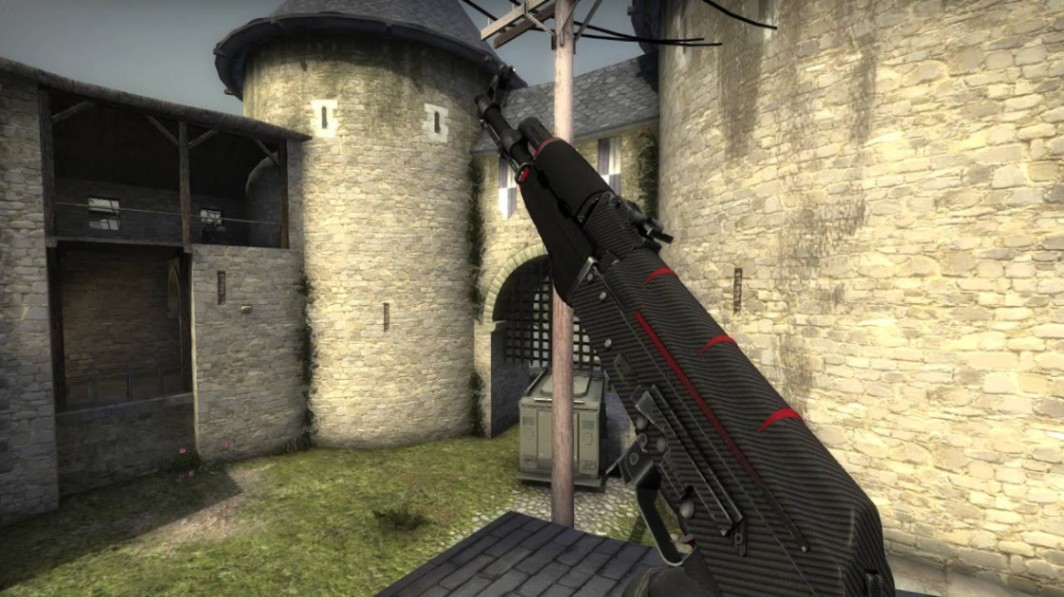
An AK-47 Redline can usually be compared with other examples of the same exterior and StatTrak status.
But an AK-47 Redline carrying valuable Katowice 2014 stickers should not be priced as a normal Redline. The underlying skin establishes the base; the craft requires a separate sticker-premium analysis.
Step 3: Check Wear and Float
Every standard CS2 weapon finish has a float value within the wear range allowed for that particular skin.
The familiar exterior categories are:
| Wear Tier | Abbreviation | General Float Range |
|---|---|---|
| Factory New | FN | 0.00–0.07 |
| Minimal Wear | MW | 0.07–0.15 |
| Field-Tested | FT | 0.15–0.38 |
| Well-Worn | WW | 0.38–0.45 |
| Battle-Scarred | BS | 0.45–1.00 |
Individual skins can have restricted float ranges, so not every finish exists across all five exterior categories.
Why Exact Float Matters
Two skins sharing the same exterior can still attract different prices.
A low-float Factory New example may interest collectors. An FT skin sitting close to the MW boundary can sometimes command more attention than an average FT example, particularly when the visible wear is favorable.
Extremely low or high floats can also carry collector premiums.
Do not automatically assign a premium simply because a float looks unusual. Check whether comparable examples actually sell above the normal market.
Pro tip: Treat float as evidence for a premium, not proof of one. A rare number matters financially only when buyers care about it.
Step 4: Value Patterns and Special Finishes
Pattern-dependent skins are where automatic inventory calculators can become unreliable.
The finish name alone may not tell you enough.
Case Hardened
Case Hardened items are a classic example.
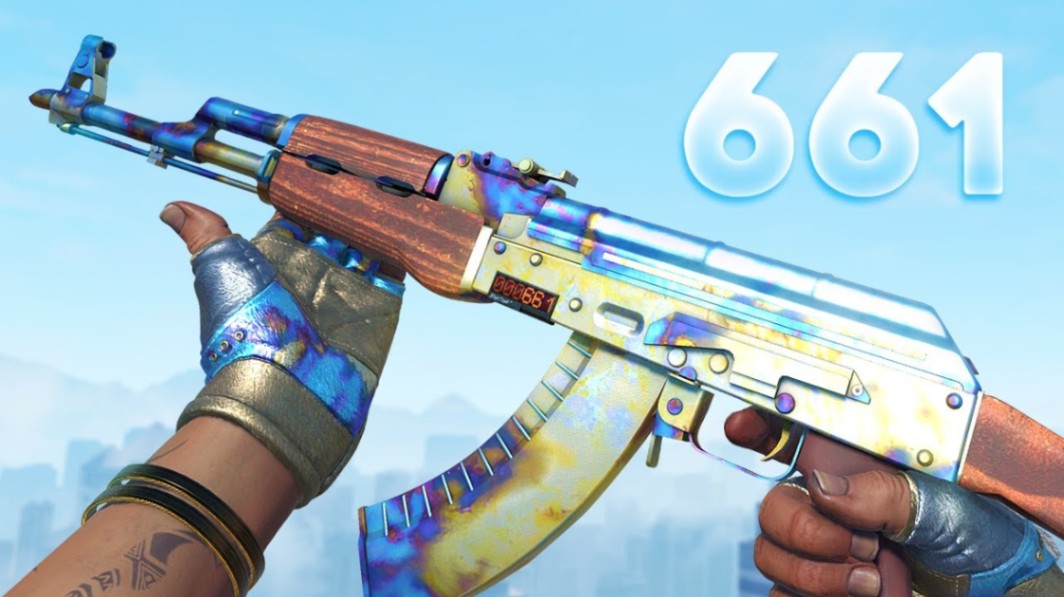
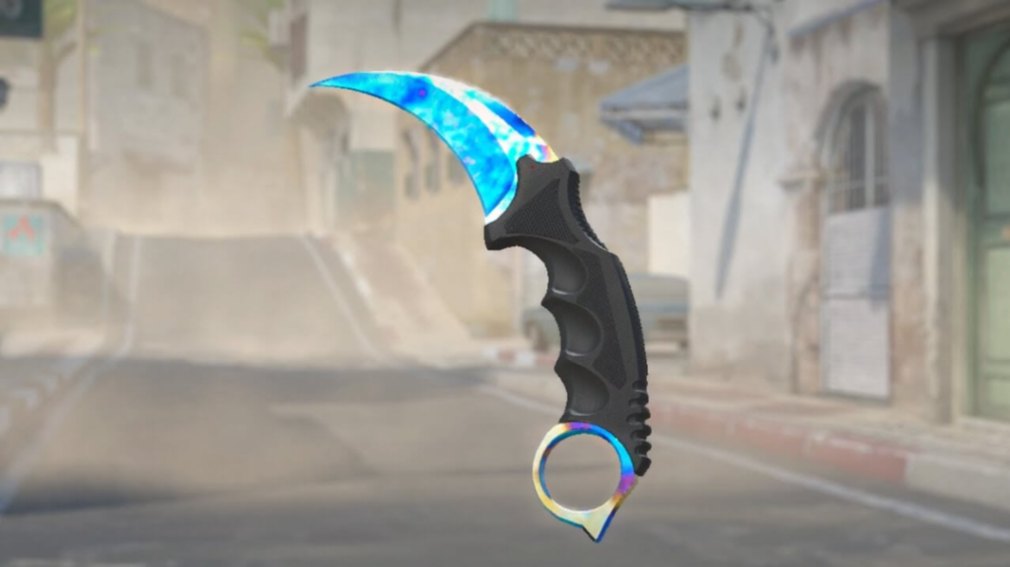
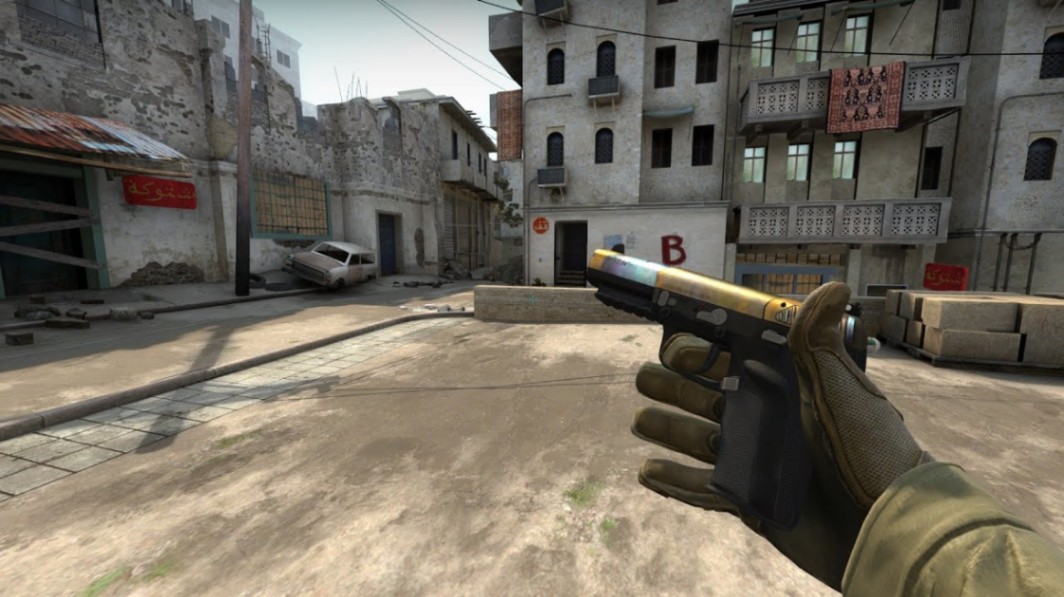
Different pattern seeds produce different distributions of blue, gold, and purple tones. Certain high-blue patterns—commonly discussed as Blue Gems—can trade far above ordinary examples.
This applies to items such as:
AK-47 Case Hardened
Karambit Case Hardened
Five-SeveN Case Hardened
Various Case Hardened knives
You should never price an unusual Case Hardened item solely from the cheapest listing for its wear tier.
Doppler Phases
Doppler knives also require exact identification.
Depending on the item, relevant variants can include regular Doppler phases as well as rare finishes such as Ruby, Sapphire, and Black Pearl.
A generic "Factory New Doppler" comparison can therefore produce a seriously misleading estimate.
Fade Percentage and Other Pattern Variables
Fade finishes can differ in desirability based on their fade characteristics. Other pattern-based skins can have specific seeds that collectors prefer.
For expensive pattern-dependent items, compare like with like:
same skin + same exterior + same pattern category + similar float
That is far more useful than comparing two items simply because they share a finish name.
Step 5: Calculate Sticker Value
Applied stickers are one of the hardest parts of CS2 inventory valuation.
A sticker's unapplied market price does not transfer directly to a skin after application.
Instead, collectors typically evaluate a craft based on the underlying weapon, sticker rarity, visual combination, position, number of matching stickers, condition, and buyer demand.
What Influences Sticker Premium?
Pay attention to:
Sticker identity
Paper, holo, foil, or other variant
Tournament and year
Team or player
Number of identical or complementary stickers
Placement
Whether stickers have been scraped
Age and rarity of the craft
Quality of the skin/sticker combination
Comparable craft sales
Katowice 2014 crafts are the obvious high-end example. A valuable Kato 2014 holo applied to a weapon can add a substantial premium, but that premium should never be assumed to equal the sticker's standalone price.
Example: Kato 2014 Craft
Imagine two otherwise comparable AK-47 Redlines.
One has ordinary inexpensive stickers. The other carries an old Katowice 2014 holo in a desirable position.
Using the same automated base price for both would miss the collector premium on the second skin. At that point, comparable crafts and specialist market knowledge matter more than a generic inventory calculator.
Pro tip: Separate expensive sticker crafts from your bulk inventory and appraise them individually.
Step 6: Account for StatTrak and Souvenirs
StatTrak and Souvenir items belong in their own comparison groups.
StatTrak
StatTrak tracks kills made by the weapon's owner. Its market premium varies heavily by skin, weapon, wear, and demand.
Do not apply a universal multiplier such as "StatTrak is always worth X% more." Check actual StatTrak sales for the specific skin.
Souvenir Skins
Souvenir items require different analysis because their tournament origin and sticker configuration can matter.
Older souvenir skins can also have characteristics that make direct comparison difficult.
When valuing one, inspect the exact item rather than assuming its price from the regular non-Souvenir version.
Step 7: Measure Liquidity
A $500 theoretical valuation means little if nobody is willing to pay anywhere near it.
Liquidity describes how easily an item can be sold around its expected market price.
Liquid vs. Illiquid Items
Popular, frequently traded skins usually have clearer pricing and tighter spreads between buyers and sellers.
Rare crafts, unusual patterns, extreme floats, and niche collectibles can be much harder to price.
| Item Type | Pricing Difficulty | Typical Liquidity |
|---|---|---|
| Common liquid skin | Low | High |
| Popular knife/glove | Low–Medium | Medium–High |
| Rare float | Medium–High | Medium–Low |
| Premium sticker craft | High | Low–Medium |
| Rare pattern collectible | High | Low |
This distinction matters when calculating a large inventory.
A collection theoretically worth a certain amount based on optimistic listings may generate less if the owner needs to liquidate everything quickly.
Check the Bid-Ask Spread
Compare the lowest realistic seller price with serious buyer offers.
A narrow gap usually indicates stronger price discovery. A huge gap tells you the item's "true" value is less certain.
Step 8: Calculate Your Inventory's Real Cash Value
Once every item has been categorized, calculate the portfolio in layers.
A Practical CS2 Inventory Valuation Formula
For standard liquid items:
Estimated Value = Comparable Cash Price × Quantity
For special items:
Estimated Value = Base Skin Value + Supported Premium
Then calculate expected proceeds:
Net Cash Value = Expected Sale Value − Selling Fees − Applicable Withdrawal Costs
Avoid inserting an arbitrary premium for float, stickers, or patterns. Use premiums supported by comparable market activity whenever possible.
Split Your Inventory Into Four Groups
For larger collections, use these buckets:
Liquid standard skins — use recent cash-market comparables.
Knives and gloves — inspect float, finish, and pattern carefully.
Sticker crafts and rare patterns — value manually.
Low-value items — use bulk or automated pricing where appropriate.
This prevents a handful of complicated collectibles from distorting an otherwise simple valuation process.
Note: An inventory calculator is excellent for getting a baseline. It should not be the final authority on Blue Gems, rare sticker crafts, exceptional floats, or other collector-grade items.
Common CS2 Inventory Valuation Mistakes
Using Only Steam Community Market
Steam is useful for checking market activity, but Steam Wallet value and cash value are not interchangeable.
If your goal is cashing out, compare actual cash marketplaces.
Pricing From the Highest Listing
Listings show what sellers want.
Sales show what buyers have actually paid.
An item sitting unsold at an ambitious price does not prove your identical item is worth that amount.
Ignoring Pattern Seed
This can cause major errors with pattern-sensitive finishes such as Case Hardened.
Always inspect the seed before pricing valuable pattern-based skins.
Adding the Full Sticker Price
Applied stickers generally do not retain their entire standalone value.
Premiums depend on the craft and market demand.
Ignoring Sticker Position
Position can matter, particularly for expensive crafts. Two weapons with the same stickers can attract different valuations when their placements differ.
Applying Fixed Premium Percentages
There is no universal "+10% for low float" or "+30% for StatTrak" rule.
Market behavior varies by item.
Confusing Asking Price With Selling Price
For rare items, sellers may wait weeks or months for the right collector.
If you need immediate liquidity, your realistic valuation should reflect that constraint.
Trusting Random Login Pages
Price-checking does not require handing your Steam password to an unknown website.
Use caution with unfamiliar domains, fake marketplace pages, suspicious browser extensions, QR-code login requests, and unsolicited trade links.
Pro tip: Open marketplaces through verified bookmarks or manually checked domains rather than links sent by strangers.
A Better Workflow for Valuing a Large CS2 Inventory
If you own dozens or hundreds of items, manually researching everything is inefficient.
Use a hybrid approach.
Phase 1: Automated Baseline
Export or scan your inventory with a reputable valuation service to identify the bulk market value.
This gives you a starting point.
Phase 2: Flag Exceptional Items
Pull out anything with:
Expensive or historically significant stickers
Very low or unusually high float
Case Hardened patterns
Special Doppler variants
High Fade characteristics
Rare souvenir combinations
Unusual collector demand
Phase 3: Check Cash Comparables
Compare recent transactions and realistic listings across multiple established marketplaces.
Make sure you compare equivalent items.
Phase 4: Apply Liquidity
Decide whether you are valuing for:
Patient sale
Normal market sale
Fast liquidation
Do not use patient-sale assumptions when calculating money you need immediately.
Phase 5: Calculate Net Proceeds
Subtract marketplace fees and any relevant withdrawal costs from the expected selling price.
This final figure is more useful than a flashy gross inventory total.
How Often Should You Revalue Your CS2 Inventory?
For casual ownership, there is little reason to obsess over every daily price movement.
Revalue when something meaningful changes: you plan to sell, you acquire expensive items, market conditions move sharply, or a major CS2 update affects supply or demand.
Collectors holding rare crafts should also keep records of comparable sales. Illiquid items may trade too infrequently for automated trackers to capture their market accurately.
Key Takeaways
Use cash-market comparables and recent sales to value your CS2 skin inventory realistically.
Check float, pattern seed, Doppler phase, Fade characteristics, StatTrak, and Souvenir status before accepting an automated estimate.
Appraise rare sticker crafts separately from the underlying skin.
Never assume an applied sticker retains its full unapplied market value.
Distinguish between gross market value, realistic sale value, and net cash-out value.
For rare collectibles, liquidity and comparable sales matter more than ambitious listings.
FAQ
How can I value my CS2 skin inventory accurately?
Start with recent cash-market prices for comparable items, then inspect float, wear, pattern, stickers, StatTrak or Souvenir status, and liquidity. For rare items, use comparable sales rather than a generic inventory calculator.
Is Steam inventory value the same as cash value?
No. Steam Community Market prices represent transactions within the Steam ecosystem, and proceeds remain Steam Wallet funds. Cash-market pricing can differ, so use external cash comparables when estimating potential cash-out value.
Does float value increase a CS2 skin's price?
It can. Exceptionally low floats, floats close to desirable wear boundaries, and collector-grade extremes may receive premiums. The size of the premium depends on the specific skin and actual buyer demand.
How much value do stickers add to CS2 skins?
There is no fixed percentage. Sticker identity, variant, placement, condition, craft quality, rarity, and comparable sales all influence the premium. Expensive applied stickers should be valued individually.
How do I value a Case Hardened skin?
Check the exact pattern seed, visible blue distribution, float, exterior, and recent sales of comparable patterns. Rare Blue Gem patterns should not be valued using the ordinary market price for the same Case Hardened skin.
What is the best way to value an expensive CS2 inventory?
Use automated pricing only for ordinary liquid items. Manually review knives, gloves, rare patterns, low-float collectibles, Souvenirs, and valuable sticker crafts, then calculate expected net proceeds after fees.
Author & Update
Author: CS2 market editor specializing in skin pricing, float analysis, pattern valuation, sticker crafts, and Counter-Strike virtual item markets. Updated: September 2026.