How to Spot Undervalued Skins in CS2 Before the Market Moves
An undervalued skin is not simply a cheap skin.
A $2 skin can be overpriced, while an expensive collectible can still look undervalued relative to comparable items. What matters is the relationship between price and the factors supporting demand.
A potential undervaluation usually appears when one or more characteristics are not fully reflected in the current asking price:
| Factor | Why It Matters | What to Check |
|---|---|---|
| Supply | Scarcer supply can support value | Active listings and collection source |
| Demand | Buyers ultimately determine liquidity | Sales frequency and weapon popularity |
| Float | Exceptional floats may command premiums | Exact float, not only FN/MW |
| Pattern | Certain seeds can look substantially different | Pattern index and visual appearance |
| Stickers | Rare crafts can add collector appeal | Sticker type, position and condition |
| Collection | Older or constrained collections may have limited supply | How new items enter circulation |
| Trade-up demand | Inputs can have utility beyond appearance | Collection structure and float |
| Liquidity | Determines how easily an item sells | Recent sales versus listings |
None of these factors guarantees appreciation. The strongest candidates usually combine several.
How to Spot Undervalued Skins in CS2
1. Compare Supply With Real Demand
Start with the basic market equation: how many people want the item versus how many copies are available.
Look beyond the lowest listing.
Check recent sales, listing depth and how quickly reasonably priced copies disappear. If dozens of sellers continuously undercut each other while very few trades happen, the skin may be cheap for a good reason.
A healthier setup is an item with consistent buyer activity and relatively constrained supply.
Popular weapon categories can help. AK-47, AWP, M4A1-S, M4A4, USP-S and Glock-18 skins generally benefit from being attached to weapons players regularly equip, although weapon popularity alone never makes a skin a good investment.
2. Study Collections and Supply Sources
Where a skin comes from can be as important as the skin itself.
Ask how additional copies enter the market. A skin from an actively opened case has a different supply profile from an item tied to an older collection with limited new distribution.
The Operation Breakout Weapon Case, for example, remains notable because it contains the original Butterfly Knife finishes. That connection can affect how traders think about the case and its long-term supply-demand profile.
Collection skins require another layer of analysis because they may also function as trade-up inputs.
Before calling any old item undervalued, however, determine whether scarcity is accompanied by actual demand. Age alone creates no guarantee of future value.
Pro tip: Research the item's supply mechanism before studying its price chart. Knowing why supply can increase is often more useful than knowing what the skin cost six months ago.
3. Check Float Before Comparing Prices
Two copies of the same skin and wear tier can deserve very different valuations.
CS2 uses a numerical float value to determine wear. The familiar tiers are:
| Wear | Standard Float Range |
|---|---|
| Factory New | 0.00–0.07 |
| Minimal Wear | 0.07–0.15 |
| Field-Tested | 0.15–0.38 |
| Well-Worn | 0.38–0.45 |
| Battle-Scarred | 0.45–1.00 |
Individual skins can have narrower possible ranges.
This creates opportunities around float boundaries. A particularly clean Minimal Wear skin, for example, may visually approach Factory New while remaining categorized and priced as MW.
Extreme low or high floats can also attract collectors.
The key is context. A low float does not automatically deserve a large premium. You need buyers who care about that characteristic.
4. Look for Valuable Patterns and Finishes
Some skins cannot be evaluated accurately using only skin name, wear and StatTrak status.
Pattern seed can dramatically influence appearance on pattern-dependent finishes.
Case Hardened is the classic example. Two otherwise identical Case Hardened skins can display very different distributions of blue, gold and other tones depending on the seed.
Doppler knives require similar attention because phases and special finishes have different visual characteristics and collector demand.
Before buying an unusual pattern:
Identify the pattern index.
Inspect the skin in-game.
Compare it with identical or similar patterns.
Check completed transactions where possible.
Avoid assuming a seller's claimed pattern premium is legitimate.
An unusual seed is not automatically a valuable seed.
5. Evaluate Stickers Separately
Stickered skins are one of the easiest places to find both overlooked value and terrible deals.
A seller may list an old craft close to the base skin price because automated pricing tools struggle to value the combination accurately.
Rare tournament stickers—including Katowice 2014 examples—can make certain crafts attractive to collectors. But you cannot simply add the standalone sticker prices to the weapon.
Placement matters. Scraping matters. The underlying skin matters. The visual quality of the craft matters.
A desirable holo in a strong position on a popular weapon is a different proposition from a random collection of expensive stickers on an unpopular base skin.
Note: Sticker value on an applied craft is highly contextual. Treat simplistic percentage formulas as rough references rather than universal pricing rules.
6. Watch Case and Collection Trends
New CS2 content can temporarily redirect attention and liquidity.
When a new case or collection arrives, players may sell existing inventory to fund openings or purchases. That can create short-term pricing pressure elsewhere in the market.
Do not automatically buy every dip.
Instead, ask whether anything fundamental changed. If supply, player interest and the item's collector thesis remain intact while price declines mainly because attention moved elsewhere, the skin deserves closer inspection.
The reverse also applies. A sudden rally caused by social-media hype can turn a previously interesting item into an expensive momentum trade.
7. Measure Liquidity, Not Just Price
A theoretical market value means little if nobody buys the skin.
Imagine two items showing similar percentage gains. One sells repeatedly every day; the other may sit for weeks before finding a buyer.
They are not equivalent investments.
Check:
Frequency of recent transactions
Number of active listings
Spread between bids and asks where available
Depth around the current market price
How quickly new listings sell
Differences between major marketplaces
Liquidity becomes especially important for rare patterns, expensive sticker crafts and unusual floats.
You might correctly identify a collectible's rarity and still struggle to exit at the price you expect.
8. Compare Similar Skins
Relative valuation is one of the strongest ways to find undervalued skins.
Do not study an item in isolation. Build a small comparison group.
For example, if you are researching an older AK-47 skin, compare it against other AK-47 finishes with similar rarity, age, supply characteristics and visual appeal.
Consider the AK-47 | Redline. Its long history, recognizable design and popularity make it a useful reference point when examining other established AK skins. That does not mean Redline itself is necessarily undervalued; it gives you a market benchmark.
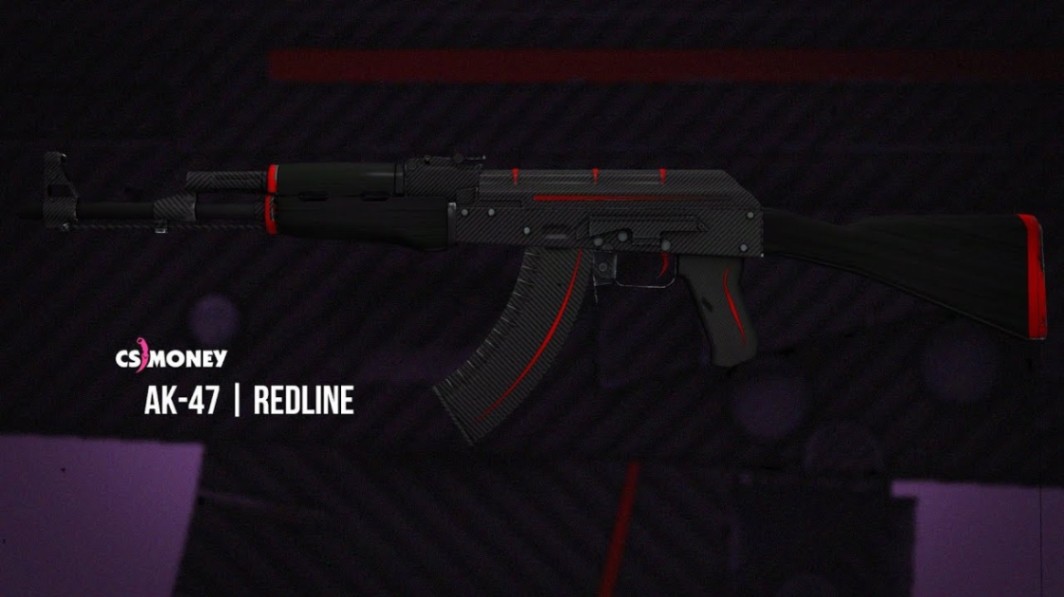
Similarly, a USP-S | Kill Confirmed can be compared with other established premium USP-S options rather than unrelated Covert skins.

Relative pricing can expose situations where two items have comparable fundamentals but significantly different valuations.
Signals That a Skin May Be Undervalued
No single metric proves undervaluation. A combination of signals is much more useful.
| Signal | Potential Positive | Main Risk |
|---|---|---|
| Low active supply | Scarcity | No real demand |
| Older collection | Constrained availability | Age already priced in |
| Popular weapon | Larger buyer pool | Strong competition from other skins |
| Exceptional float | Collector premium | Thin niche market |
| Desirable pattern | Additional scarcity | Difficult valuation |
| Old sticker craft | Collector appeal | Hard to resell |
| Trade-up utility | Functional demand | Economics can change |
| Temporary sell-off | Possible discount | Price may continue falling |
The best opportunities often look boring initially. They have understandable fundamentals but lack the attention currently flowing toward newer or more speculative items.
Common Value Traps to Avoid
The biggest mistake is confusing cheap with undervalued.
A skin can trade below historical highs because demand permanently weakened. Waiting for it to "return" to an old price is not an investment thesis.
Be particularly careful with:
Low-volume spikes: One unusual transaction can distort price charts.
Social-media hype: Viral attention can disappear faster than it arrived.
Fake pattern premiums: Sellers can exaggerate the significance of ordinary seeds.
Sticker arithmetic: Applied stickers rarely retain their full standalone market value.
Illiquid collectibles: Scarcity without buyers does not guarantee a good investment.
Recent pumps: Buying immediately after a sharp increase gives you little margin for error.
Also account for marketplace fees and spreads. A small apparent discount can disappear once transaction costs are included.
Pro tip: Before buying, write one sentence explaining why the item is undervalued. If your only argument is "the price should go up," keep researching.
A Practical Undervalued Skin Checklist
Use the same process every time rather than relying on instinct.
Step 1: Identify the item. Record skin, wear, StatTrak status, float, pattern and stickers.
Step 2: Research supply. Determine the case or collection and whether meaningful new supply continues entering circulation.
Step 3: Measure demand. Look for actual sales rather than social-media mentions.
Step 4: Compare alternatives. Check similar skins on the same weapon and within comparable rarity or collector categories.
Step 5: Inspect special attributes. Look for exceptional floats, patterns, sticker crafts or trade-up utility.
Step 6: Check multiple markets. One marketplace can temporarily show an unusual premium or discount.
Step 7: Estimate your exit. Decide who would realistically buy the item from you and how liquid that market is.
Step 8: Set a maximum entry price. Do this before buying, not after becoming emotionally attached to the skin.
This process will eliminate many supposed bargains. That is exactly the point.
Key Takeaways
Undervalued skins have identifiable market characteristics that may not be fully reflected in their current price.
Study supply, actual sales and liquidity before focusing on historical price performance.
Float, pattern seeds and stickers can create hidden premiums that generic pricing tools may miss.
Older cases and collections deserve attention, but age and rarity do not guarantee demand.
Compare similar skins to identify relative valuation gaps.
Avoid buying solely because a skin fell from its previous high or is trending on social media.
FAQ
How do you find undervalued skins in CS2?
Compare active supply, recent sales, float, collection availability, pattern, stickers and liquidity against similar skins. Look for measurable discrepancies rather than simply choosing items that appear cheap.
Are old CS2 skins always a good investment?
No. Older skins can benefit from constrained supply and nostalgia, but some have weak demand or poor liquidity. Age is only one part of the valuation.
Does float matter when looking for undervalued skins?
Yes. Low floats, wear-boundary floats and other exceptional values can attract premiums. However, the size of that premium depends on the specific skin and collector demand.
Can stickered CS2 skins be undervalued?
Yes. Automated pricing can struggle with rare or visually desirable sticker crafts. Sticker type, placement, condition and the underlying weapon skin all influence the premium.
Are Battle-Scarred skins worth checking?
Absolutely. Some finishes remain visually appealing in Battle-Scarred condition, while extreme high floats can have collector interest. Evaluate the actual appearance and market demand rather than assuming BS is always inferior.
What is the biggest mistake when searching for undervalued skins?
Treating a falling price as proof of value. A skin can keep declining if demand weakens or supply increases. Always identify a concrete reason why the market may be mispricing the item.
Author & Update
CS2News Editorial Team — Counter-Strike market coverage focused on CS2 skins, cases, float values, patterns, trading mechanics, and digital item economics. Updated: October 2026.